

A Buyer’s Guide to Baseball Cards: From $500 to Five Figures
Written by Robin Rankow.
A guide to navigating the baseball card market at every stage.
Sports memorabilia collecting rarely begins as an investment strategy. It begins with memory: a favorite player, a childhood summer, a team passed down through generations. Baseball cards sit at the heart of American sports culture. They are small pieces of cardboard that carry statistics, stories, and entire eras. For some, collecting starts with nostalgia. For others, it starts with curiosity about value. Over time, both paths lead to the same place: a deeper understanding of rarity, condition, and the market around the game.
Today’s baseball card market includes casual hobbyists and serious collectors. No matter where you begin, understanding how it works at different levels can help shape a collection that grows with you.
The $500 Collector: Learning the Market
For many collectors, the first serious step into baseball cards begins around $500. At this level, the goal isn’t to land a headline-making card. It’s to learn how the hobby works.
Some beginners buy raw (ungraded) cards because they feel more accessible and often cost less. Others prefer graded examples because they offer structure and clarity. There’s no single right way to begin, but the difference matters early.
A graded card has been authenticated and given a condition score by a third-party company such as PSA, SGC, or Beckett. That number can influence price dramatically. Raw cards require the buyer to evaluate condition on their own, which can be exciting, but also risky if you’re still developing your eye.
Within this range, collectors often look for recognizable players rather than rare trophies.
Collector-grade examples of mid-century issues, such as a 1969 Topps Reggie Jackson or a lower-grade 1960s Hall of Fame card, often fall within the $500 range. They offer a connection to history without much financial risk. At this stage, what matters most is learning how centering, surface wear, and demand affect value.
The $500 tier is about building comfort with the market.
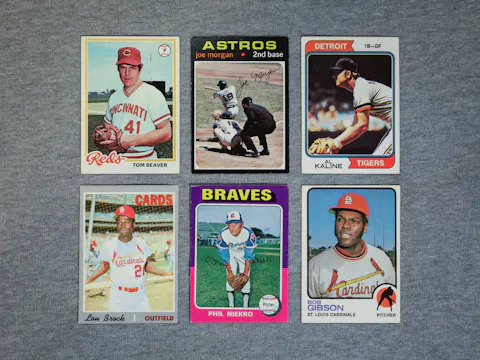
Photo by Mick Haupt on Unsplash.
The $1,000 Collector: Buying with Intent
Around the $1,000 level, the mindset begins to change. Collecting becomes less about exploring and more about deciding.
Buyers often narrow their focus. Instead of picking up a range of players or eras, they may concentrate on one athlete, one team, or one set. Upgrading also becomes part of the process, trading several smaller purchases for a stronger example.
This is where vintage rookie cards in lower grades become realistic options. A collector might consider a mid-century star in PSA 3 or 4 condition, accepting visible wear for the chance to own a significant piece. On the modern side, high-grade examples of established players or limited parallels start to feel within reach.
The key shift here is intent. Condition is weighed more carefully. Population reports begin to matter. Buyers pay closer attention to auction results instead of asking prices. Decisions feel more measured.
Recognizable vintage rookies, such as the 1968 Topps Johnny Bench or lower-grade examples of the 1957 Topps Sandy Koufax, often sit near the $1,000 mark. They offer historical relevance without requiring a major commitment.
At $1,000, a collector is starting to understand how value works.
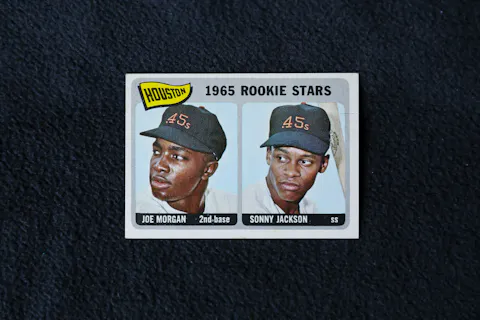
Photo by Mick Haupt on Unsplash.
The $5,000 Collector: Scarcity and Strategy
By the time a collector reaches the $5,000 range, the hobby feels different. It’s no longer about sampling the market. It’s about choosing carefully and waiting when needed.
At this level, scarcity matters as much as condition. A collector might pursue a strong mid-grade example of an iconic rookie card, a pre-war issue, or a limited modern parallel with a low print run. Purchases are fewer, but each one carries more weight.
Discipline becomes important. The difference between a PSA 4 and a PSA 5 can mean thousands of dollars. Eye appeal also matters. Cards with distracting flaws can be harder to sell later. Buyers at this level often track auction results, monitor population reports, and know when to step back instead of chasing hype.
For example, a collector in this tier might target a mid-grade 1956 Topps Roberto Clemente rookie or a solid example of a 1954 Hank Aaron card. These are recognizable, historically meaningful pieces that can anchor a collection without requiring pristine condition.
At $5,000, collecting becomes quieter and more deliberate.
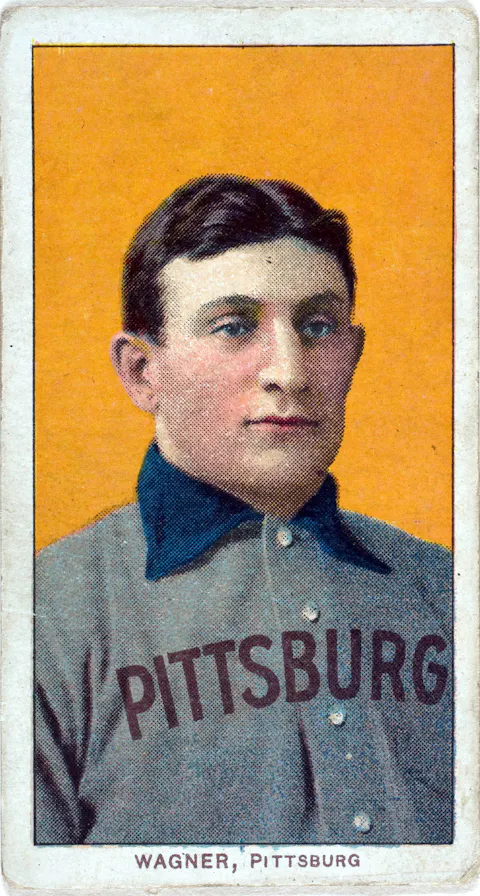
Honus Wagner, shortstop with the Pittsburgh Pirates, image from the American Tobacco Company (T206) baseball card, circa 1909-11. Photo in the public domain.
The $10,000+ Collector: Blue-Chip Territory
Once a collector crosses into five-figure territory, the approach shifts again. Purchases are rarely impulsive. They are researched, compared, and often delayed.
Cards in this range tend to be iconic: blue-chip rookies, scarce pre-war issues, and low-population modern parallels that rarely surface. Condition still matters, sometimes dramatically, but so do history and long-term demand.
Liquidity becomes part of the thinking. How often does the card trade? How stable has demand been? Are recent auction results consistent or volatile? Collectors at this level often follow major auction houses and understand that timing can influence price as much as grade.
Higher-grade examples of classic issues, such as the 1952 Topps Willie Mays or scarce early 20th-century tobacco cards, can move well into five figures, particularly when supply is limited. These are not casual purchases. They are cornerstone pieces.
At $10,000 and above, collecting becomes a form of stewardship. The buyer is holding a piece of the sport’s history.
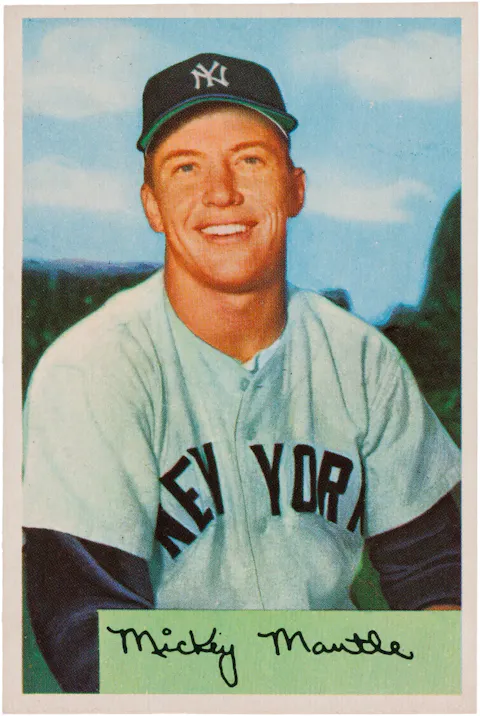
Mickey Mantle, outfielder with the New York Yankees, image from the 1954 Bowman baseball card. Photo in the public domain.
Collecting vs. Investing: Finding Your Balance
Baseball cards occupy a unique space in the world of sports memorabilia. They are deeply personal objects — reminders of childhood heroes, historic seasons, and shared rituals — but they also operate within a sophisticated, highly visible marketplace.
Some collectors are driven by passion. Others focus on long-term returns. Most fall somewhere in between.
The strongest collections reflect both. Passion keeps interest steady through market swings. Knowledge helps avoid costly mistakes. Understanding grading, scarcity, and demand leads to better decisions, but genuine interest in the player, era, or story is what keeps collecting meaningful.
Markets rise and fall. Players surge and cool. The appeal of holding a tangible piece of the game remains. Whether starting at $500 or building toward five figures, value comes from more than price. It also comes from perspective—and sometimes from the simple thrill of holding the same card that once sat in a childhood shoebox.